

You Have the Traffic. You Just Don’t Know Who’s Visiting.
Here is a number that should bother you.
Roughly 95 to 98 percent of the people who visit your website leave without filling out a form, making a call, or doing anything that tells you they were there.
You spent money getting them to your site. SEO, paid ads, content, social, email campaigns, maybe even radio or print driving people online. The traffic is real. Your analytics confirm it. People are landing on your pages, reading your content, clicking through your services, and then — nothing.
They leave. And you have no idea who they were.
For mid-sized businesses running real marketing budgets, that is not just a missed opportunity. That is a structural gap between your marketing investment and your revenue.
But here is the part most people miss. Even if you could identify every visitor on your site tomorrow, that alone would not fix the problem. Because knowing who visited is only half the equation. The other half is having a system that actually does something with that information — follows up, nurtures, routes, tracks, and closes.
That is a two-part problem. And it needs a two-part solution.
The Problem Is Not Traffic. The Problem Is What Happens After.
Most mid-sized businesses have already solved the awareness problem. You are generating traffic. Your site is getting visits. People are finding you through search, through ads, through referrals, through campaigns you are actively running and paying for.
The part that is broken — or more often, completely missing — is what happens between a website visit and a sales conversation.
There is no system identifying who those visitors are. And even when a lead does come in through a form or a phone call, there is often no structured follow-up process behind it. No automation. No nurture sequence. No pipeline tracking. No way to know whether someone was contacted, what was said, or where the conversation stalled.
That is two gaps, not one. A visibility gap and a follow-up gap. Most businesses are living with both.
Why Forms and Chatbots Are Not Enough
If your entire lead capture strategy depends on someone filling out a contact form, you are building your pipeline on the smallest possible slice of your audience.
Think about how you buy. When you are researching a vendor, a platform, or a service provider, how often do you fill out a form on your first visit? Your second? Most decision-makers visit a site multiple times before ever making contact — if they make contact at all.
Forms capture the people who are ready to talk right now. That matters. But it leaves out everyone who is early in their research, comparing options, or simply not willing to hand over their information yet.
Chatbots help in some cases, but they still depend on the visitor choosing to engage. Most do not.
The result is a pipeline that only reflects a fraction of actual demand. Your sales team thinks traffic is not converting. In reality, traffic is converting into interest — you just cannot see it.
Part One: Identify Who Is Already on Your Site
Website visitor identification is the layer between your traffic and your sales process that most mid-sized businesses do not have.
It works by matching anonymous website visits to real business and contact data. When someone visits your site, the technology identifies the company, and in many cases the individual, behind that visit. It captures what pages they viewed, how long they stayed, how many times they returned, and what content they engaged with.
That means instead of waiting for a form fill, your team gets a feed of companies and contacts showing active interest in what you offer — ranked by behavior, recency, and fit.
This is not guesswork. It is intent data drawn from your own web traffic, matched against real business records, and delivered in a format your team can act on.
That is what Lead Reveal does. It turns anonymous traffic into identified, enriched, prioritized leads. But identification without follow-up is just a list. And a list without a system behind it is just another thing your sales team ignores.
Which brings us to part two.
Part Two: Build a Follow-Up System That Actually Works
This is where most businesses stall — even the ones that invest in visitor identification or lead generation tools. They get the data. They see the leads. But there is no structured system to do anything with them.
Follow-up happens manually. Or inconsistently. Or not at all. Leads sit in a spreadsheet. A sales rep reaches out once, does not hear back, and moves on. Nobody tracks where prospects dropped off or which ones came back to the site a week later.
That is not a people problem. That is an infrastructure problem.
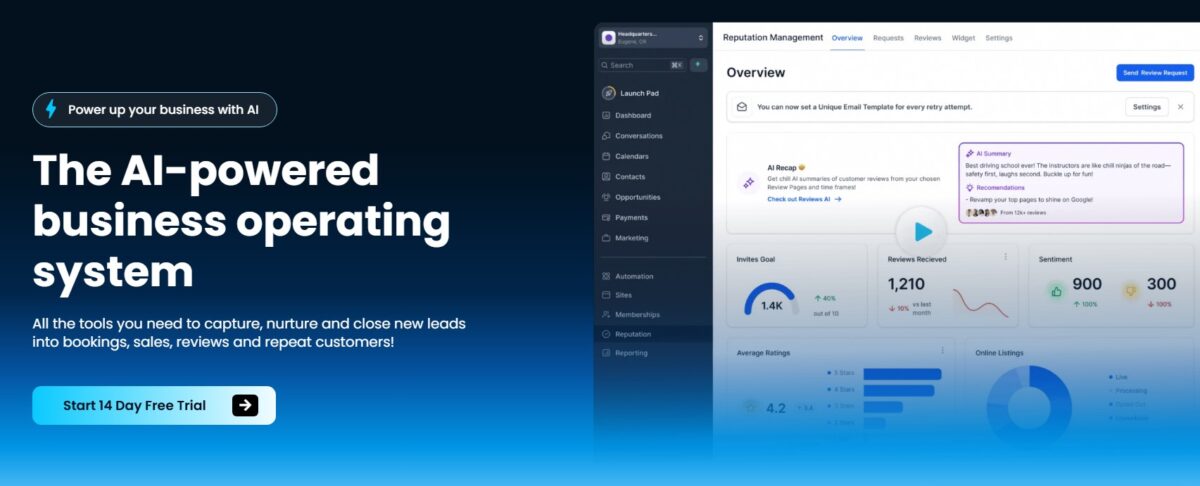
A platform like Go High Level is designed to solve exactly this. When it is set up properly, Go High Level gives a mid-sized business the CRM, automation, and pipeline management needed to turn identified leads into real sales conversations — without depending on someone remembering to send a follow-up email.
Automated follow-up sequences. When a high-intent visitor is identified, the system should trigger outreach automatically — email, text, or internal notification — based on what they looked at and how they scored. Not a generic blast. A relevant, timed response that matches where the prospect is in their research.
Pipeline management. Every identified lead should land in a pipeline stage that reflects where they actually are. New visitor. Repeat visitor. High intent. Contacted. Booked. This gives your team a visual, real-time view of what is in play and what needs attention.
Lead routing. Not every lead should go to the same person. Go High Level can route leads based on source, behavior, geography, deal size, or any criteria that matches how your sales team is structured. A visitor researching enterprise services and a visitor looking at a starter package should not land in the same queue.
Nurture for the not-ready-yet. Some identified visitors are clearly interested but not ready to talk. Instead of letting them disappear, a well-built Go High Level workflow keeps them engaged — drip sequences, value-based emails, retargeting triggers — until the timing is right.
Tracking and attribution. Your CRM should show you which traffic sources produce the highest-intent visitors, which campaigns drive real pipeline, and where prospects drop off. That feedback loop makes your marketing spend smarter over time.
Missed opportunity recovery. One of the most underused features in Go High Level is the ability to re-engage leads that went cold. If someone visited your site three months ago, showed high intent, but never converted, a reactivation workflow can bring them back into the conversation.
The Difference Between Lead Capture and Lead Intelligence
Lead capture asks the visitor to identify themselves. Lead intelligence identifies them whether they raise a hand or not.
That distinction matters more than most businesses realize.
Lead capture gives you a name and an email when someone is ready to convert. Lead intelligence gives you visibility into the full spectrum of interest — the early researchers, the comparison shoppers, the returning visitors who keep coming back to your case studies or service pages but have not made contact yet.
But lead intelligence without a CRM and follow-up engine behind it is like having a radar system with no one in the control room. You can see the signals, but nothing happens.
That is why identification and automation need to work together. Lead Reveal on the front end catching who is there. Go High Level on the back end making sure your team responds in a way that is timely, relevant, and trackable.
Why This Hits Mid-Sized Businesses Hardest
Enterprise companies often have intent data platforms, ABM tools, and dedicated ops teams to manage this. Small businesses may not have enough traffic to make visitor identification worthwhile.
Mid-sized businesses sit in the middle — and that is exactly where this gap causes the most damage.
You have real traffic. Real marketing spend. Real sales teams that need pipeline. But you likely do not have a system connecting your website activity to your outbound follow-up.
That means your marketing is generating demand that your sales team never sees. Campaigns that look like they are underperforming may actually be driving serious interest — you just have no mechanism to capture and route it.
The cost is not just lost leads. It is misallocated budget, inaccurate attribution, and a sales team that blames marketing for a pipeline problem that is actually a visibility problem.
Why a Go High Level Snapshot Will Not Fix This Either
If you have already looked into Go High Level, you may have been sold a snapshot — a pre-built template with pipelines, workflows, and automations that someone packaged up and resold.
Snapshots can be a reasonable starting point. But they are not built for your business. They do not account for how your sales cycle works, how your leads behave, what your team actually needs to see, or how visitor identification data should flow into the system.
A snapshot designed for a dentist’s office is not going to work for a B2B services company processing identified website visitors. The pipeline stages are wrong. The follow-up timing is wrong. The automation logic does not match.
This is where custom setup matters. Your Go High Level system should be configured around your specific lead sources, your sales process, your team structure, and the kind of intent data you are feeding into it. That means custom pipeline stages, tailored automation sequences, proper lead scoring, and reporting that reflects your actual business goals — not someone else’s template.
The Traffic You Are Paying For Is Already Telling You Something
This is the part that gets overlooked in almost every conversation about lead generation.
You do not necessarily need more traffic. You need to understand the traffic you already have — and you need a system that acts on what it finds.
Every visit to your site is a signal. Some of those signals are weak — a single-page bounce from an irrelevant source. But many of them are strong — repeat visits from companies in your target market, time spent on high-value pages, engagement patterns that indicate real research and real intent.
Right now, those signals disappear the moment the visitor closes the tab. Visitor identification catches them. A properly built CRM and automation system turns them into pipeline.
That is not adding complexity to your marketing. It is closing the gap between what your marketing generates and what your sales team gets to work with.
What Happens When You Stop Guessing
Businesses that pair lead intelligence with a real follow-up system typically see a few things shift quickly.
Sales teams stop relying solely on inbound forms and start working a broader, higher-quality pipeline. Marketing gets better attribution — they can finally see which campaigns are driving real engagement, not just clicks. Outreach becomes warmer because reps know what the prospect was looking at before they ever pick up the phone. Follow-up becomes systematic instead of reactive. And leads that would have quietly disappeared get caught, nurtured, and converted.
None of that requires a massive technology overhaul. It requires two things working together — visibility into who is on your site, and a CRM engine that does something useful with that information.
If You Have the Traffic, You Should Know Who Is In It — And What Happens Next
You have already done the hard work. You built the site. You are running campaigns. You are driving people to your pages.
The question is whether you are going to keep letting 95 percent of that traffic walk away unidentified — or whether you are going to start turning that activity into actionable, prioritized leads your sales team can follow up on this week.
A follow-up system is not optional for mid-sized businesses that are serious about growth. It is the infrastructure that connects your marketing spend to your revenue.
Identification gives you the who. A CRM and automation system gives you the what next. You need both.
Ready to See Who Is Already on Your Site — and Actually Follow Up?
Lead Reveal identifies your anonymous website visitors, enriches the contact and company data, and prioritizes high-intent leads so your team knows who to focus on.
Custom Go High Level setup through IDMD makes sure those leads land in a CRM that is built around your sales process — with automation, pipeline tracking, and follow-up workflows that actually match how your business works.
Need help connecting the dots? Talk to Jodi.
More from Beyond Bus Benches
- JodiMorel.com — marketing strategy, consulting, and custom business systems
- IDMD — custom CRM, funnel builds, and automation for local business
- Lead Reveal — website visitor identification and lead prioritization for U.S.-based businesses